 App Building
How to secure an app: 10 essential tips for bulletproof protection
Ready to see what Base44 can do for you? Get started →
App security breaches can devastate both businesses and users, and when cybercriminals infiltrate mobile apps, they can gain access to sensitive personal information, financial data and business-critical systems. The consequences range from identity theft and financial losses to severe reputational damage that can take years to recover from.
With mobile app use surging, knowing how to secure an app is non-negotiable. Cybercrime is projected to cost the world $10.8 trillion in 2026, climbing to $15.6 trillion by 2029, showing just how high the stakes are.
This comprehensive guide walks you through the most effective strategies to protect your app from cyber threats and build user trust from day one.
Base44 backend handles data logic permissions and APIs for agent use.
Base44 gives users full app functionality without technical expertise.
But essentially, the most effective app security begins with choosing the right no-code app builder.
Base44 provides enterprise-grade security features built into every application, including managed infrastructure, automated security monitoring and robust encryption protocols. This foundation means you can build an app with strong security measures rather than trying to add them later.
Base44 is SOC 2 Type II compliant and ISO 27001 certified, meaning its security controls are independently audited and verified against international standards.
Whether you’re exploring how to build an app with AI or experimenting with vibe coding, security should be your top priority from the start.

TL;DR: how to secure an app
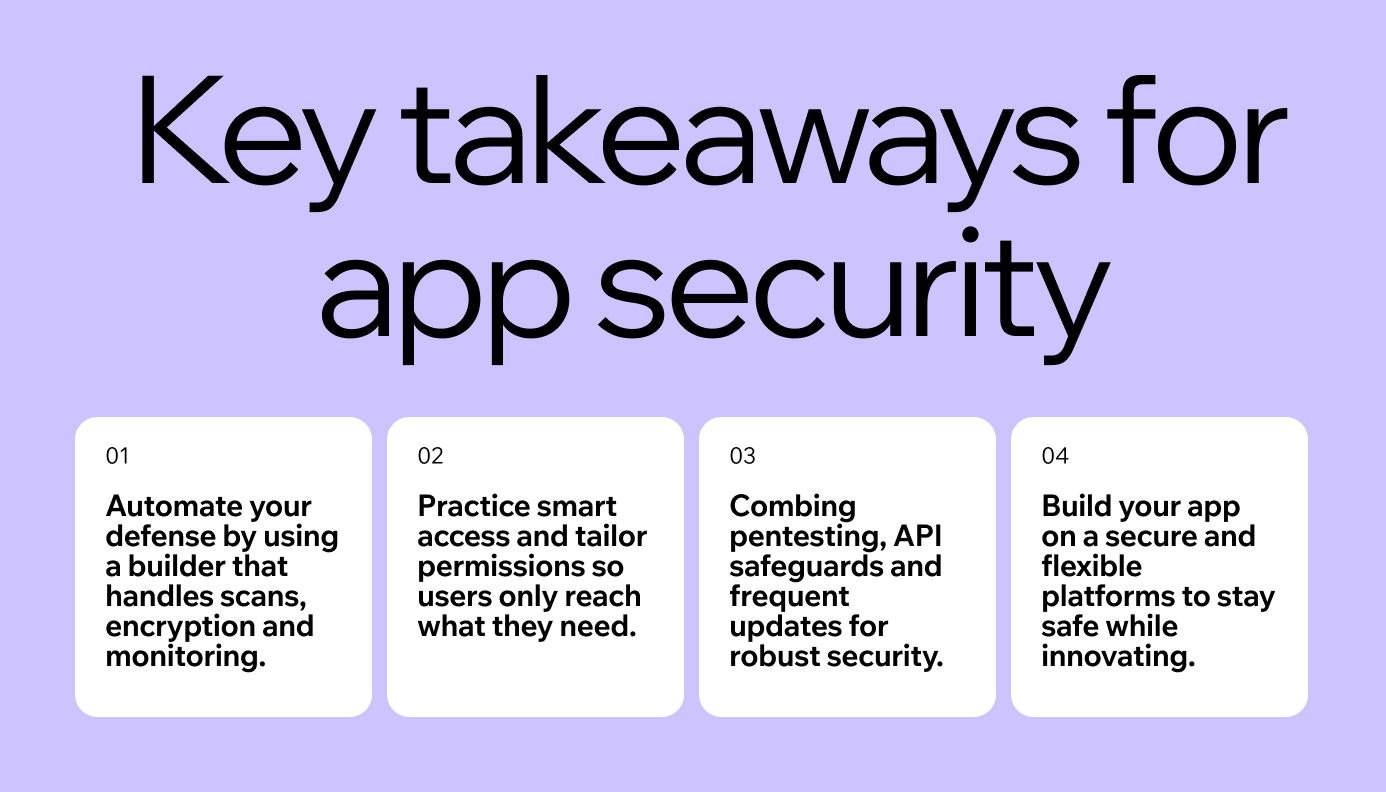
Don’t have time to read it all? Start with these essentials:
- Base44 makes app security effortless: with managed infrastructure, automated scans, encryption and role-based access controls.
- 10 expert practices: permission controls, API protections, pentesting and regular updates, help you keep threats and common security app mistakes out at every layer.
- The right tools matter: combining a secure builder like Base44 with creative workflows from the best vibe coding tools or innovations from the best AI app builders gives you both flexibility and peace of mind.
Essential app security measures
| Security measure | Role in app security | |---|---| | Managed app infrastructure | Ensures servers are monitored, updated and backed up to prevent breaches | | Custom permission controls | Limits access so users only see and modify what they’re allowed to | | Security scans | Identifies vulnerabilities in code and dependencies before they’re exploited | | Encryption | Protects sensitive data both in transit and at rest | | Regular updates | Keeps your app patched against new threats and improves overall security |
"App security is foundational to the success of any application. Addressing vulnerabilities early ensures your app remains reliable and your users’ data stays protected." - Nina Boyd, PMM at Base44
How to secure an app: 10 expert tips
Keeping your app safe doesn’t have to be overwhelming. With the Base44 AI app builder, you can focus on building great features while the platform helps you maintain strong security practices throughout your development process.
These tips align with the OWASP Mobile Top 10, the industry-standard framework for identifying and addressing the most critical security risks in mobile applications. The OWASP list is updated regularly by the security community and serves as a useful benchmark for auditing your own app's security posture. You can find the full list at owasp.org.
- Managed app infrastructure
- Custom permission controls
- Perform security scans
- Secure your source code
- Security dashboard & row-level security (RLS)
- Encryption
- API security controls
- Pentesting
- Secure data storage
- Regular app updates
01. Managed app infrastructure
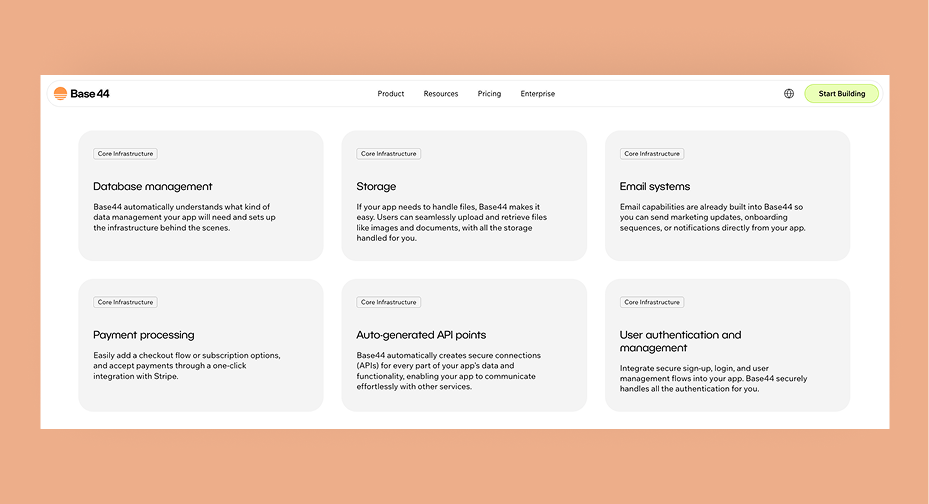
Managed app infrastructure removes the complexity of maintaining secure servers and systems by providing professionally monitored hosting environments. This means your application runs on regularly updated, patched and monitored servers that meet industry security standards.
The infrastructure includes automated backup systems, disaster recovery protocols and 24/7 monitoring for suspicious activities. Professional teams handle server maintenance, security updates and threat detection, significantly reducing the risk of infrastructure-level vulnerabilities that cybercriminals often exploit.
Base44 provides fully managed infrastructure as part of its platform, automatically handling server security, updates and monitoring. This means your app benefits from enterprise-level security without requiring dedicated infrastructure management expertise or resources.
02. Custom permission controls
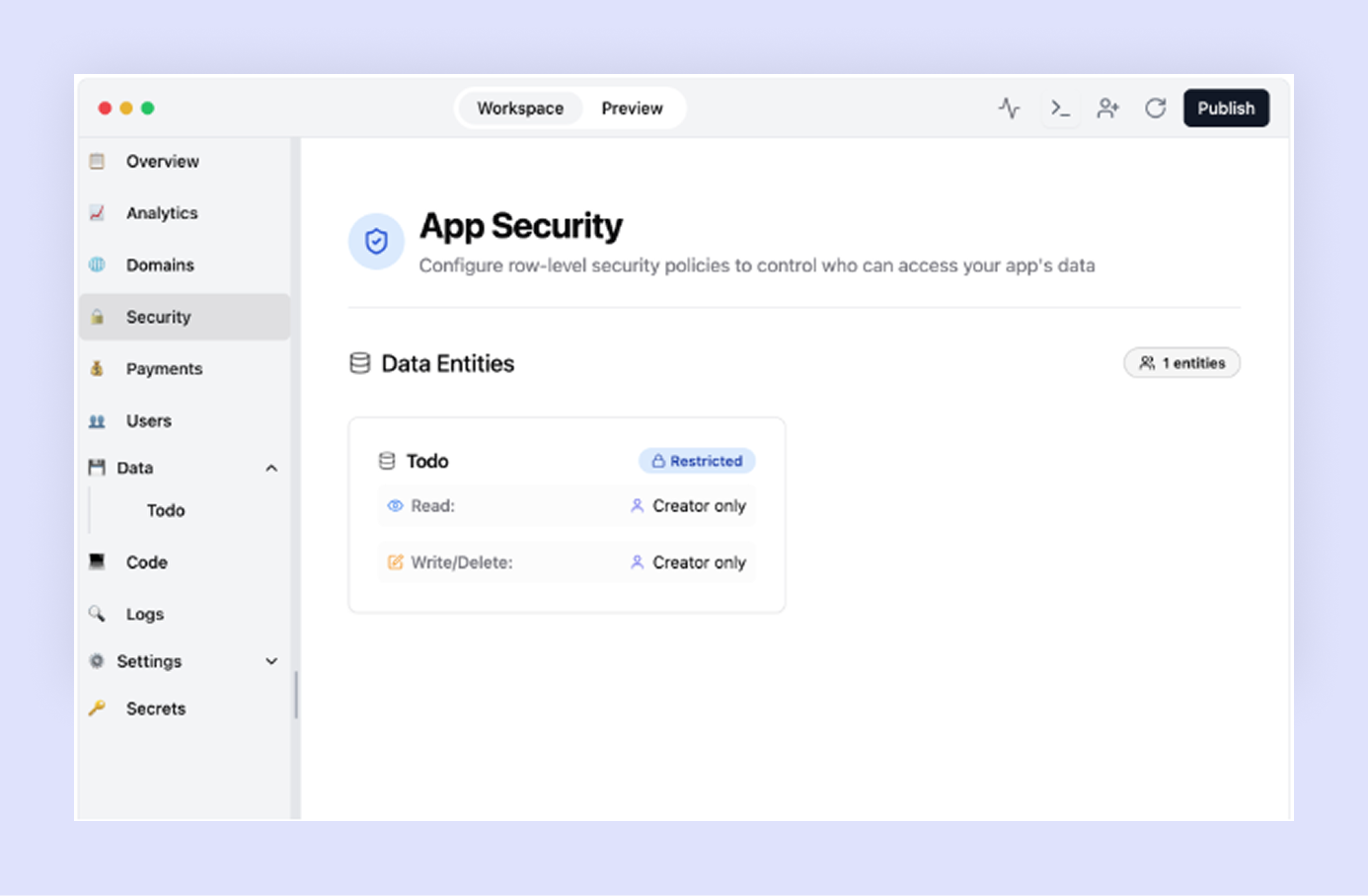
Permission controls determine what actions users can perform within your application and what data they can access. Implementing granular permission systems ensures users only have access to features and information necessary for their specific roles or needs.
Effective permission controls follow the principle of least privilege, where users receive the minimum permissions required to perform their tasks. This approach limits the potential damage if user accounts become compromised and prevents unauthorized access to sensitive application areas.
Base44 includes sophisticated custom SSO and permissions tools that allow you to create custom user roles and define specific access levels for different application features. The platform's permission system integrates seamlessly with user authentication, making it simple to control who can access what within your app.
Strong authentication is the first line of defense
Permission controls work best when paired with strong authentication. At minimum, enforce multi-factor authentication (MFA) for any app that handles sensitive data, so a stolen password alone isn't enough to grant access. Session management matters too: sessions should time out after a period of inactivity, tokens should be stored securely and users should be required to re-authenticate before performing sensitive actions like changing passwords or approving transactions. Biometric authentication (fingerprint or face recognition) adds a second layer that's both more secure and more convenient for users. Base44's built-in authentication system handles session management and supports custom SSO integrations, so you can enforce these controls without building them from scratch.
03. Perform security scans
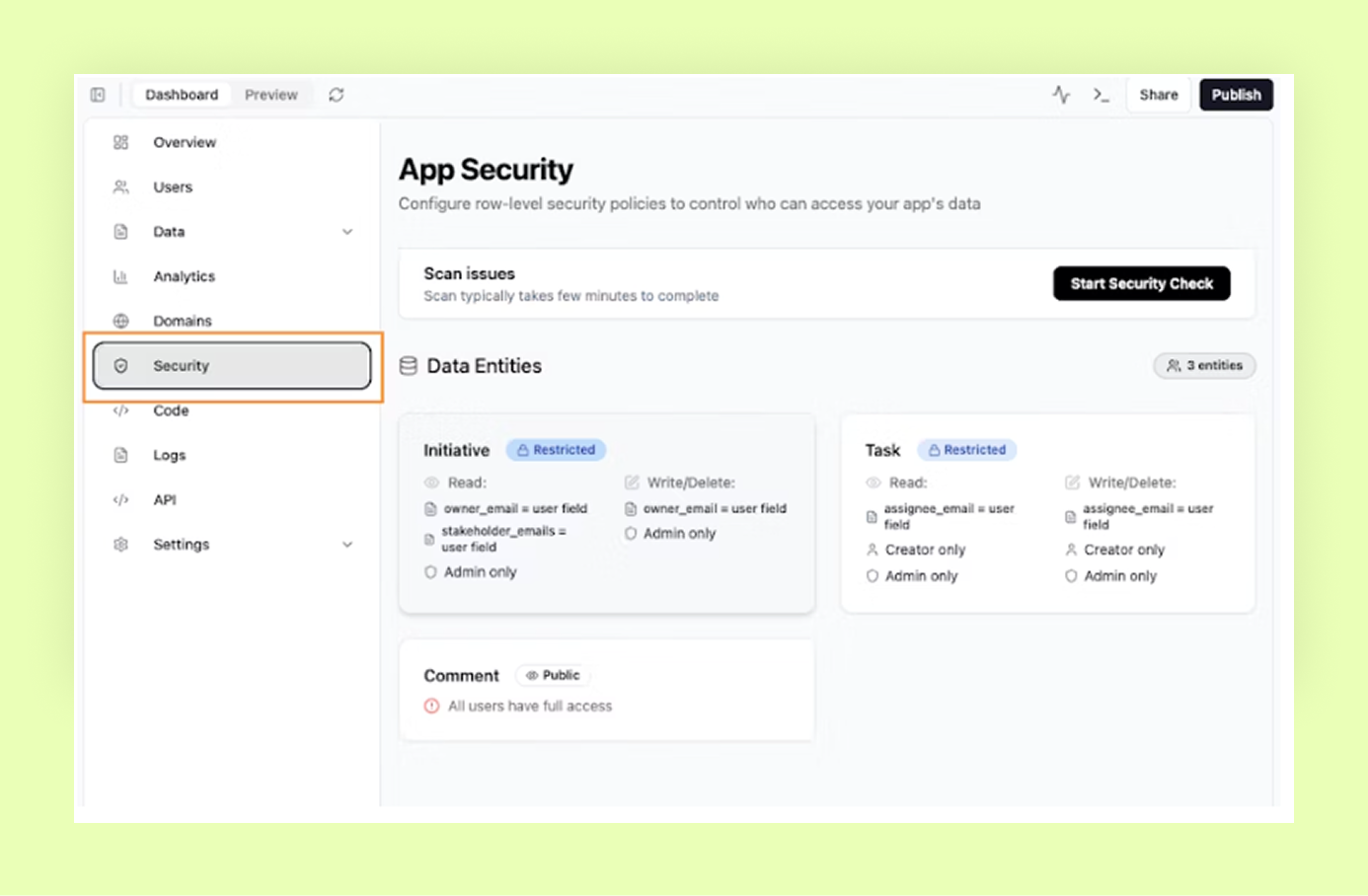
Regular security scans identify vulnerabilities in your application code, dependencies and configuration before malicious actors can exploit them. These scans examine your app for known security flaws, outdated components and potential entry points for cyber attacks.
Automated scanning tools can detect various threats including SQL injection vulnerabilities, cross-site scripting flaws and insecure data storage practices. The frequency of these scans should increase during development phases and continue throughout your app's lifecycle to catch new vulnerabilities as they emerge.
Base44 incorporates automated security scanning into its development workflow, continuously monitoring applications for potential vulnerabilities. The platform provides detailed reports on security findings and offers guidance on addressing any identified issues, ensuring your app maintains strong security posture over time.
04. Secure your source code
Source code protection prevents unauthorized access to your application's underlying logic, algorithms and sensitive information embedded within the code. Exposed source code can reveal security vulnerabilities, API keys and business logic that competitors or malicious actors might exploit.
Code security involves implementing access controls for development repositories, using code obfuscation techniques and ensuring sensitive information never appears in plain text within your codebase. Regular code reviews and static analysis help identify potential security issues before they reach production environments.
Base44 provides secure development environments with built-in code protection measures. The platform handles code compilation and deployment securely, ensuring your source code remains protected while maintaining efficient development workflows for your team.
05. Security dashboard & row‑level security (RLS)
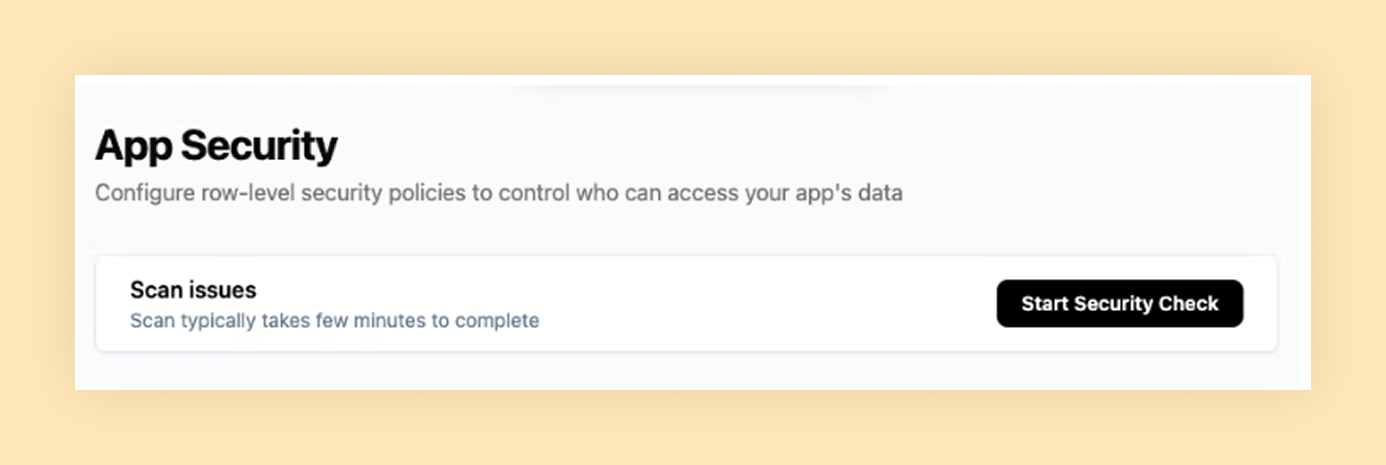
A robust app doesn’t just protect the perimeter, it controls who can see or modify each individual record. Row‑level security (RLS) lets you define granular rules for every data entity in your app so that only authorized people can read, edit or delete specific rows. In Base44’s security dashboard you’ll see a list of your data entities and whether each one is public or restricted.
Base44 makes RLS management simple. If you're unsure where to start, Base44's built-in security check scans your app for missing RLS rules, exposed secrets or unsafe backend functions and highlights issues. You can fix them all with a single click or address each one individually and Base44 recommends running the scan before publishing your app.
By centralizing RLS management and automating security scans, Base44’s security dashboard helps you enforce least‑privilege access and maintain strong data‑level protection across your entire application.
06. Encryption
Encryption transforms sensitive data into unreadable formats that can only be decoded with the proper decryption keys. This protection ensures that even if cybercriminals intercept your data during transmission or storage, they can't access the actual information without the encryption keys.
Implement encryption for data both in transit (moving between your app and servers) and at rest (stored in databases or files). Use industry-standard encryption algorithms and ensure encryption keys are properly managed and regularly rotated to maintain security effectiveness.
Base44 automatically implements end-to-end encryption for all data transmission and storage. The platform uses advanced encryption standards and manages encryption keys securely, ensuring your app's data remains protected without requiring complex encryption implementation on your part.
"Encryption is a fundamental aspect of app security, safeguarding sensitive data both in transit and at rest. Implementing strong encryption ensures that user and business information remains protected throughout the application lifecycle." - Ilay Granot, Marketing at Base44
07. API security controls
Application Programming Interfaces (APIs) serve as connection points between your app and external services, making them potential targets for cyber attacks. Securing these connections involves implementing authentication, rate limiting and input validation to prevent unauthorized access and abuse.
API security includes using secure protocols like HTTPS, implementing proper authentication mechanisms and validating all incoming data to prevent injection attacks. Regular API security testing helps identify vulnerabilities in these critical connection points.
Base44 provides comprehensive API security features including automated threat detection, rate limiting and secure API endpoints. The platform monitors API usage patterns to identify suspicious activities and implements security measures that protect against common API-based attacks.
08. Pentesting
Penetration testing involves security experts attempting to hack your application using the same techniques malicious actors would employ. This proactive approach identifies vulnerabilities that automated scans might miss and provides insights into how real attacks might unfold.
Professional penetration testing should occur regularly, especially after significant updates or changes to your application. The results provide detailed reports on discovered vulnerabilities along with recommendations for addressing each identified security gap.
Base44’s built-in security monitoring and vulnerability detection systems complement external pentesting efforts. The platform's security features help address common vulnerabilities that penetration tests typically discover.
09. Secure data storage
Secure data storage protects sensitive information from unauthorized access, both from external threats and potential internal breaches. This involves encrypting stored data, implementing proper access controls and ensuring data backup and recovery procedures meet security standards.
Consider what data your app actually needs to store and minimize data collection to reduce potential exposure. Implement data retention policies that automatically remove outdated information and ensure compliance with privacy regulations that apply to your users.
This is a long article and only part of it is shown here. Read the full article on iCARE.